Showing posts with label A-Z Challenge 2016. Show all posts

Wednesday, 11 May 2016

A-Z Challenge 2016: Reflections

http://www.a-to-zchallenge.com

April 2016's A-Z Challenge was a first for the Murch Blog.  More than just one first: the Murch Blog did not even exist before the Challenge!  I realised that it was all very well gathering piles of names and records about Murches in times-gone-by.  I needed to expand the horizons of the Murch Surname Study.

I had never quite been able to grasp the concept of telling stories about my ancestors.  For me, the raw data was the most important thing.  Stories and anecdotes were very nice if you happened to come across them, but they weren't to be made a priority.  In fact, I entered the Murch Blog into the A-Z Challenge with the vague idea that I would just put names and dates down in each blog post.  But each individual I chose to write about made me want to write more about them, to identify each ordinary name and turn it into an extraordinary person.  Because to me, being a secretary in a time when girls were supposed to stay at home until they got married - that's extraordinary.  Being written about in the local paper as being 'trustworthy and faithful' - that's extraordinary.

OK, so the blog didn't garner many views.  But I didn't expect that from this blog.  I had in my mind the picture of some desperate genealogist somewhere who had almost given up on finding Hephzibah, or Queenie, or Robert, or Violet - and then they came across my blog.

Happy researching! I'm glad I could help.


© 2016 Ros Haywood. All Rights Reserved

Saturday, 30 April 2016

A-Z Challenge 2016: Z is for Zacharie Murch 1628

http://www.a-to-zchallenge.com


Zacharie Murch was baptised on 29 September 1628 in Hennock, Devon, England, the son of Hugh and Elizabeth Murch.  This seems straightforward and, if you were looking for a Zacharie, you probably feel confident that you have found the right one.

But look at the deaths, and your confidence slowly evaporates.


  • Zacharye Murch died in 1648 in Hennock.  Could this be your man, aged only 20?  The parish burial register gives no indication of age
  • Zacharie Murch died in 1674 in Hennock.  Could this be your man, aged only 46?  The parish burial register gives no indication of age
  • Zacherie Murch died in 1677 in Hennock.  Could this be your man, aged only 49?  The parish burial register gives no indication of age

This is where a Surname Study would come in: they would ALL be 'your man'.  Even if you weren't running a Surname Study, my advice to you would be to write them ALL down.  Further research might show which one was which.


© 2016 Ros Haywood. All Rights Reserved

Friday, 29 April 2016

A-Z Challenge 2016: Y is for Young Child Murch

http://www.a-to-zchallenge.com
Have you read my 'C' post: 'C is for Child Murch buried 1750'?  It dealt with the sad circumstance where a 'child of Gideon Murch' was buried in 1750 without so much as a name - and of course, no gender either, so I don't even know if I'm mourning a 5 x great-uncle or a 5x great-aunt.

Well, it happened again - and to the same family. In 1754 another of Gideon and Elizabeth's children was buried (on 30 October).  Yet, once again, frustratingly it was given neither a name nor a gender:


(Yes, it's the same clerk as before.)  He does write 'infant' against somebody else's entry, so Gideon's 'young child' may not have been a new baby.  But that's all I know at the moment. *sigh*


© 2016 Ros Haywood. All Rights Reserved

Thursday, 28 April 2016

A-Z Challenge 2016: X is for eXtended Family

http://www.a-to-zchallenge.com
You've been spending ages (possibly years) working on your own family tree, and in fact genealogy is getting a little bit stale.  That's how I was beginning to feel, after 30 years of research.

Enter the Murch One Name Study (also known as a Surname Study).  Think of the times you have searched through a parish register, line by line, and discounted those with different given names or in different locations as being 'not yours'.  Well in a Surname Study - they're ALL 'yours'!  Suddenly you go from having tunnel vision to having a whole new extended family.  And, far from cramping your style, it makes you realise just how many folk are (or were) out there who are just as deserving of your love, care, and attention.  You don't so much develop different ways of researching - it's just that everywhere you turn, you are guaranteed to find individuals and families who belong in your Surname Study.  And then you can look at your own biological ancestors with renewed energy.

You have extended your horizons.  It's wonderful!


© 2016 Ros Haywood. All Rights Reserved

A-Z Challenge 2016: W is for William Samuel Searle Murch 1853

http://www.a-to-zchallenge.com
William Samuel Searle Murch was born in 1853 in the Devonport area of Devon, England, to Edward Murch (a tailor) and his wife Catherine.  In the 1871 census, he is 17 and still living with his parents, working as a photographer, but later that same year he married Hannah Hoskin Remfry, also from the Devonport area.

In the 1881 census, William and Hannah had four children.  It is possible that the photography did not pay enough to keep a family of six, so William has changed his career, and is now a "Skilled Labourer in HM Keyham Yd".  Keyham Yard, also known as the North Yard or Steam Yard, was officially opened in 1853 and is part of the extensive Devonport dockyards.  The Yard was extended in 1895 by 118 acres, a 10-acre tidal basin and a 35-acre closed basin, and three huge docks which could accept the larger (war)ships being built.  The extension was opened in 1907.

Boundary stone for the Keyham Yard

But the Arts called again, and in the 1891 census, William is a teacher of music.  He and Hannah have added three children to the family, and are living in Monument Street, Devonport, although maybe the 'teacher of music' was merely a filler, because on the 1901 census William is back in the dockyards, working as a machine driller - a job which he continues in and is listed as having as far forward as the 1911 census.

William features in the Murch Surname Study.


© 2016 Ros Haywood. All Rights Reserved

Wednesday, 27 April 2016

A-Z Challenge 2016: V is for Violet Isabelle Murch 1897


http://www.a-to-zchallenge.com
Violet Isabelle Murch was baptised in Dawlish, Devon, England on 31 October 1897.  Her father, Henry Frederick Murch was a journeyman painter, and her mother was named Alice.  But by the 1901 census, Henry Frederick has died, and Alice is living as a widow, with three-year-old Violet Isabelle, with Alice's mother- and brother-in-law in Portland Place, Exeter.

Further research has shown that Henry died (aged only 27) and Violet was born in the same quarter.  Did he ever get to see his baby?

© 2016 Ros Haywood. All Rights Reserved

Monday, 25 April 2016

A-Z Challenge 2016: U is for Ulalia Murch buried 1651

http://www.a-to-zchallenge.com


Look at the image below, which comes from the burial register of Hennock, Devon.  It has been transcribed as 'Ulalia Murch'.  Do you agree that it is 'Ulalia'?  It was quite a favoured name in Devon in the 17th century, also being spelled Eulalia and Eulalie.


© 2016 Ros Haywood. All Rights Reserved

Saturday, 23 April 2016

A-Z Challenge 2016: T is for Thomas Alfred Murch 1877

http://www.a-to-zchallenge.com
Thomas Alfred Murch first appears on the 1881 census, living with his family in Llanfaelog, Wales.  His father, John, was a coastguard, which explains why there are seven children under the age of 10 (in 1881), yet their births are in different places: Somerset, Cork (Ireland), St Mawgan (Cornwall), and Llanfaelog. Thomas's mother, Jane, also came from Cork.

But that's where the trail goes cold.  Thomas does not appear in the 1901 or 1911 censuses, and the entire family does not appear in the 1891 census (then later they are in Holyhead, Anglesey).  I cannot find an early death for Thomas.  Is it possible that he became a coastguard like his father and moved all over the place?  Were the family in Ireland in 1891, visiting family?

Thomas features in the Murch Surname Study.

© 2016 Ros Haywood. All Rights Reserved

Friday, 22 April 2016

A-Z Challenge 2016: S is for Samuel Murch 1778-1849

http://www.a-to-zchallenge.com
Samuel Murch was my 4 x great grandfather, and obviously a good person.  I say 'obviously', because I have found two little pieces about him in local newspapers:

Exeter & Plymouth Gazette, 30 Oct 1841:
Column devoted to the Agricultural and Industrial Association Dinner at Subscription Room, Canniford's London Tavern
"To the Journeyman who has worked longest in the employ of the same master, £1. - Samuel Murch, Sen., 38 years employed in the Ottery Factory, 18 years during the time of the present respected proprietor, Mr. Newbery."
and his death notice:
Small article from Exeter & Plymouth Gazette (Saturday January 20, 1849) in Deaths column:
"Jan.16, at Ottery St. Mary, Mr. Samuel Murch, in the 71st years of his age.  He was employed 44 years in the Ottery Factory, - the last 26 years in the silk department of the present proprietor.  He was a trustworthy and faithful servant."

Samuel had his faith to sustain him.  Or did he? It seems as though the Murches were constantly searching for ‘the truth’.  The Murch family were nonconformists: Protestant Dissenters, then Presbyterians, then Congregationalists – and nonconformists were often associated with being hard workers and entrepreneurs.


Samuel features in the Murch Surname Study.

© 2016 Ros Haywood. All Rights Reserved

Thursday, 21 April 2016

A-Z Challenge 2016: R is for Robert Murch 1687

http://www.a-to-zchallenge.com
Robert is my  7 x great grandfather.  He is also one of my ‘brick wall ancestors’.  A ‘brick wall ancestor’ is usually an end-of-line ancestor – the furthest back you can go on one particular line; you’ve looked and looked and looked, and you just can’t find a connection to go further back.  Robert lived in Ottery St Mary, Devon, England (I think).  He certainly married there: 24 December 1712 to Elizabeth Bastone (whose parents were Gideon and Mary Bastone).  He certainly had children there: Mary 1713, Elizabeth 1716, John 1718, Gideon 1721, Robert 1723, and Josiah 1725.

But as for his parents?  Well, there’s a Robert christened 22 February 1682, with parents Robert and Dorothy.  And there’s another Robert, with father Emanuell.  Which one do you think is ‘my’ Robert? Or should I just keep looking?


Robert features in the Murch Surname Study
.
© 2016 Ros Haywood. All Rights Reserved

Wednesday, 20 April 2016

A-Z Challenge 2016: Q is for Queenie Gladys Noyse Murch 1901

http://www.a-to-zchallenge.com
Queenie Gladys is one of those females that would be left out of a Surname Study by some managers.  She wasn't born a Murch, you see - but I think that she spent most of her life, and more of her life as a Murch, so I include her in my Study.

Queenie Gladys Noyse was born in 1901 in the West Ham Registration District of London (hovering over Essex at one point) to Ernest and Mina Noyes.  Since Ernest came from Bow, and Mina from Shadwell, and most of the children were born in Leyton, Essex, there was probably a distinctive Cockney accent within the home.  She married Sydney Samuel Murch in 1920 in the Thanet Registration District of Kent, England.

Queenie features in the Murch Surname Study.


© 2016 Ros Haywood. All Rights Reserved

Tuesday, 19 April 2016

A-Z Challenge 2016: P is for Phillis Emma Murch 1860-1863

http://www.a-to-zchallenge.com
You may have decided to read this post because you thought "That spelling is incorrect!  It should be 'Phyllis'!"  Welcome to the wonderful world of genealogy and family history, where spelling can get VERY creative, and you shouldn't dismiss a record because "it's not the way I spell it".

Phillis Emma Murch was born in the late spring or early summer of 1860 in the Colchester Registration District, Essex, England.  She died and was buried just before her third birthday, on 18 March 1863.  She may have lived a very short life, but she manages to teach us (as genealogists) something very important.  Many people in 1860 were illiterate, so the official who registered the name spelled it the way he thought it should be spelled, and maybe the parents didn't know that it was wrong.  How many times have you come across marriage certificates where both the bride and groom made an X instead of writing their name?

And it's not just way-back-when that it happened, either.  When my maternal grandfather went to register the birth of my mother, he had such a thick Devon accent that the registrar wrote him down as 'William Rupert Ball', when his name was actually 'William Hubert Ball' (and he wasn't illiterate).  One of my Haywood families was enumerated in the 1861 census as Howard.  I wonder if there were any thick accents in that crowd?  And one of the best is a lady who also features in the Murch Surname Study: Susaner Murch.  Yes, she is actually spelled 'Susaner'.  It happened in Devon - can't you just hear the accent?

Phillis/Phyllis features in the Murch Surname Study.


© 2016 Ros Haywood. All Rights Reserved

Monday, 18 April 2016

A-Z Challenge 2016: O is for Olive Frances Murch 1891

http://www.a-to-zchallenge.com
Olive Frances Murch's place of birth is difficult to pin down.  On the 1911 census, she was born in Birmingham, Warwickshire.  On the 1901 census, she was born in Balsall Heath, Worcestershire.  The GRO (General Register Office) has her registered in the Aston Registration District, which covers Birmingham.  Wherever she was born, on both the above censuses she was living with her aunt and uncle, Ellen and George Newbold, who ran a pub in Balsall Heath (which is part of Birmingham).  By the time Olive was 20, she was working as an insurance clerk.

This goes to show how careful you have to be with assigning a county to a town/city.  Most genealogists will recommend that you write down only what was there at the time, even if the boundaries have moved since then.  (A nightmare in point is the city of Bristol, which is variously written as being in Somerset, Gloucestershire, Avon, and its own county of B&NES - Bristol and North East Somerset.)


Olive features in the Murch Surname Study - which covers a LOT of counties!


© 2016 Ros Haywood. All Rights Reserved

Saturday, 16 April 2016

A-Z Challenge 2016: N is for Nelly Murch 1856

http://www.a-to-zchallenge.com
Nelly was registered as Ellen Murch in the December quarter of 1856 (October-November-December) in the South Molton Registration District, Devon, England.  I was quite prepared to look for a Helen, because Nelly/Nellie is often a pet name for Helen, but at the same time I know that some children were (and are) registered under what we would consider to be a pet name, such as Tom, or Ben.

On the 1871 census, Nelly is still at school, living with her parents in Parsonage Lane, South Molton.  Her father is listed as 'Carrier'- but it does not state what he carried!

From there, it is difficult to find her on the census, mainly because of her name.  On the 1881 census, there is an Ellen of the right age.  On the 1891 census, a Helen.  Or she may have got married and changed her surname (although I cannot find a record of a marriage for her).

So Nelly/Ellen/Helen remains a mystery.  But that's what genealogy is all about.  Mysteries, the thrill of the chase, and finally (and hopefully) the genealogist's 'Happy Dance' when you find the elusive record.


Nelly features in the Murch Surname Study.


© 2016 Ros Haywood. All Rights Reserved

Friday, 15 April 2016

A-Z Challenge 2016: M is for May Adeline Murch 1880

http://www.a-to-zchallenge.com
May Adeline Murch was born in 1880 in Dover, Kent, England, where she lived with her parents, John and Charlotte, in Cambridge Road. Her father, born in Devonport, Devon, was a shipwright.  Charlotte died in 1888, when May was only 8 years old.

May worked as a secretary in a barrister's office, living at 34 Oakwood Gardens, Ilford, Essex, England, with her widowed (and elderly) father, sister Emma, brother Arthur, and niece Sybil.

May features in the Murch Surname Study.


© 2016 Ros Haywood. All Rights Reserved

Thursday, 14 April 2016

A-Z Challenge 2016: L is for Livingstone Murch 1895-1916


http://a-to-zchallenge.com
Livingstone MURCH was the youngest of seven children born to Ebenezer MURCH and his wife, Sarah. (The unusual name of ‘Livingstone’ is easily explained: it was his maternal grandmother’s maiden name – Flora LIVINGSTONE.) He was born on 9 April 1895 in Glasgow, Lanarkshire, Scotland, and as a teenager worked for the Post Office as a telegraph messenger while living at home with his parents at 49 Collins Street there.

The Aberdeen Daily Journal of 19 June 1912 reports Livingstone, age 17, to be ‘defending his title’ as the champion of the swimming contest ‘Scottish 100 Yards Junior Championship’. It seems only natural, then, that he should sign up for the Navy…

Three days before his 21st birthday in 1916, Livingstone signed up as a fitter. Six months later, he was dead – drowned as his first (and only) ship went down. HMS Flirt was sunk as a result of a raid by destroyers and torpedo boats from the German navy on the Dover Barrage. Livingstone’s body was never recovered. He is remembered on Panel 15 of the Portsmouth Naval Memorial. He was awarded the Victory medal and the British War Medal for campaign service, which were given to his family.  

HMS Flirt


Livingstone features in the Murch Surname Study.

© 2016 Ros Haywood. All Rights Reserved

Wednesday, 13 April 2016

A-Z Challenge 2016: K is for Kate J M Murch 1877

http://www.a-to-zchallenge.com
Kate J M Murch was born in 1877 to Henry James Murch and Susan Dickason in Balsall Heath, Worcestershire, England.  In the 1881 census the family is living at 6 Balsall Heath Road, Kings Norton, Worcestershire; Kate’s father Henry is a saddler.

By 1891, her older sister, Alice (now aged 24) is enumerated as a Professor of Music, while their father is listed as a “brown saddler”.  This mystified me at first.  A 'brown saddler' made riding saddles - but there was also such a person as a 'black saddler', who made saddles for carts and gigs - in black leather.  


Kate Murch features in the Murch Surname Study.

© 2016 Ros Haywood. All Rights Reserved

Tuesday, 12 April 2016

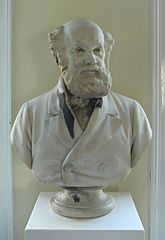
A-Z Challenge 2016: J is for Jerom Murch 1807-1895

http://www.a-to-zchallenge.com
Jerom Murch was born in Honiton in 1807.  He married Anne Taylor in 1830 and on the 1841 census he has been enumerated as a 'Dissenting Minister' (this was Unitarianism), living in the Parade in Bath, Somerset, England with his wife, three children, and four servants.

By the 1851 census, none of the children is recorded as being at home (although the four servants are still there), and Jerom is now recorded as a 'Unitarian Minister of Lewins Mead Chapel, Bristol'.

By the 1861 census, he has now become 'Magistrate for Somerset'.  On the 1871 census he is recorded as a 'Landowner Magistrate', and his servants, instead of being merely 'male' or 'female', are now recorded as 'Butler', 'Lady's Maid', 'Cook', and 'Housemaid'.  He became Mayor of Bath 1863, 1864, 1876, 1877, 1886, 1890, 1892.

On the 1881 census, now aged 73, he has added a footman to his staff, and Jerom is described not only as a Magistrate, but also Deputy Lieutenant and Alderman.  When aged 83, he is now described as 'living on own means' on the 1891 census.  Jerom was knighted on 21 May 1894.

Sir Jerom died in 1895.  There is an excellent (short) article on his life at Murch Family Worldwide

Sir Jerom features in the Murch Surname Study


© 2016 Ros Haywood. All Rights Reserved

Monday, 11 April 2016

A-Z Challenge 2016: I is for Isabella Murch 1853

http://www.a-to-zchallenge.com


Isabella Murch's birth was registered in the Marylebone Registration District, Middlesex, England in the September quarter of 1853 (July, August, and September).  If you have never lived there, there is often some confusion as to how you pronounce 'Marylebone' (and there is still confusion if you have!).


 Here's my ever-popular potted history of the name:

 1.  Named after a church called St Mary-by-the-Tyburn (because the church was next to the Tyburn stream/river, which went from Hampstead to the Thames).
THEN
2.  13th century, almost all the aristocracy in England speak French as their main language: it becomes St-Mary-a-le-Bourne (bourne being French for stream)
THEN
3.  We slowly get St Marylebone

So, technically it is Marry-leh-bon
Some people prefer Marry-le-bone
Other people prefer Marly-bone


Isabella features in the Murch Surname Study.


© 2016 Ros Haywood. All Rights Reserved

Copyright

You may NOT use the contents of this site for commercial purposes without explicit written permission from the author and blog owner. Commercial purposes include blogs with ads and income generating features, and/or blogs or sites using feed content as a replacement for original content. Full content usage is not permitted.

You May Also Be Interested In...